Roles for DevOps Course
DevOps Engineer | DevOps Architect | DevOps Consultant | System Engineer | System Administrator
Key Features
Real time Practice Labs
Practice Labs makes it easy for you to put your learning into practice in a safe environment that you can access anytime with a compatible PC, Browser and Internet connection.
Physical and Virtual Online Classrooms
We will use collaborative web conferencing with live screen sharing to conduct highly interactive live online teaching sessions And Also physical Classrooms.
24/7 Support on Slack
Got queries? Our 24/7 support team will go extra mile so you can have easy and enjoyable experience with devops training in hyderabad on Slack which is a communication platform.
Job & Interview Assistance
Our interview assistance can help you overcome your fear in facing interviews. It helps in walk into your next interview with confidence and get your dream Job.
Live Projects with Our Industry Partners
We offer Live Projects and opportunity to take part in project design supported by industry partners including business and community organizations.
Internship After Course
Industry needs the best talent to stay in today’s fast and ever-changing world, you will get a chance to do Internships and working closely provides a win for both Industry and students/trainees.
Upcoming Batch Schedule for DevOps Training.
Sri VidyaTechnologies provides flexible timings to all our students. Here is the DevOps Course Training Schedule in our branches. If this schedule doesn’t match please let us know. We will try to arrange appropriate timings based on your flexible timings.
 28-04-2021 28-04-2021 | Monday (Monday - Friday) Weekdays Regular | 08:00 AM (IST) (Class 1Hr - 1:30Hrs) / Per Session | Course Fees |
| 28-04-2021 | Monday (Monday - Friday) Weekdays Regular | 11:00 AM (IST) (Class 1Hr - 1:30Hrs) / Per Session | Course Fees |
| 28-04-2021 | Monday (Monday - Friday) Weekdays Regular | 10:00 AM (IST) (Class 1Hr - 1:30Hrs) / Per Session | Course Fees |
| 28-04-2021 | Monday (Monday - Friday) Weekdays Regular | 10:00 AM (IST) (Class 1Hr - 1:30Hrs) / Per Session | Course Fees |
Sri Vidya Technologies Provides DevOps Certified Training Program in Hyderabad
Curriculum
The curriculum has been designed by faculty at Sri Vidya Tech and leading industry leaders. The teaching, content and projects in the course are by world-renowned faculty and other practicing management professionals from leading companies.
MODULE 1: Introduction to DevOps (Duration: 1Hr)
Learning Objective:
This session will help you understand the purpose and the scope of DevOps in the current market, tools and the skills the market is looking for and how the culture is applied in the industries
Topics:
- DevOps Principles in detail
- DevOps Engineer Skills in the market
- Knowing DevOps Delivery Pipeline
- The market trend of DevOps
- DevOps Technical Challenges
- Tools we use in DevOps
Hands-On:
A brainstorming session on the trends in current IT industries
MODULE 2: DevOps on Cloud (Duration: 2Hrs)
Learning Objective:
This session will help you understand how DevOps is currently being used on cloud infrastructure by automating entire setup. Learn cloud setup helps faster releases, fewer software failures and how trendy it is.
Topics:
- Essentials of Cloud computing?
- Cloud and virtualization architecture
- Cloud deployment architecture
- Cloud providers – An overview
- Why we need DevOps on Cloud?
- Introducing to Amazon web services
Hands-on:
- How to setup AWS account
- Various AWS services for Devops – An overview
- DevOps using AWS – Demo
MODULE 3: GIT – A Version Control Tool (Duration: 5Hrs)
Learning Objective:
This session will help you understand why version control system streamlines the development of working with different people and makes very easy to collaborate on projects.
Topics:
- Knowing about Version control
- Git – A CLI
- Essentials of GIT in industry
- How to setup GIT
- Working with various commands in GIT
- Recording Changes to the Repository
- How to check the Status of Your Files
- How to track New Files
- Staging our modified files
- Ignoring Files from GIT
- Viewing Your Unstaged and Staged Changes
- How to commit Your Changes
- Skipping the Staging Area and commit
- Removing Files from GIT
- Viewing the Commit History
- Limiting Log Output
- Using a GUI to Visualize History
- Undoing Things
- Changing Your Last Commit
- Unstaging a Staged File
- Unmodifying a Modified File
- Working with Remotes
- Showing Your Remotes
- Adding Remote Repositories
- Fetching and Pulling from Your Remotes
- Pushing to Your Remotes
- Inspecting a Remote
- Removing and Renaming Remotes
- Branching and Merging in Git
- What a Branch Is
- Basic in Branching and Merging
- Branch Management in GIT
- Branching Workflows and its usage
- Remote Branches – create and delete
- Rebasing
- Git workflows
- Git cheat sheet
- Recording Changes to the Repository
Hands-on exercises:
- Installing Git
- First-Time Git Setup
- Getting a Git Repository
- Working with various git commands
- Working with Local repository vs remote repository
- Managing remote repository
- Stashing operations and various local repository operations
- Branching and merging operations
- Resolving conflicts during merges
- Managing access on repository managements
MODULE 4: Jenkins – Continuous Integration (Duration: 8 Hrs)
Learning Objective:
This session will help you understand why Jenkins is evolving as a must tool in the current DevOps practices. Understanding how Jenkins allowing current industries to set up their build pipelines with a more quickly and sophisticated build process by drastically reducing the risks in the software development lifecycles.
Topics:
- Essentials of Continuous Integration
- An example scenario where CI is used
- Know about Jenkins and its architecture in detail
- Jenkins tool Management in detail
- Know about User management in Jenkins
- Authentication
- Jenkins own database user creation
- Options to enable integration with LDAP
- Authorization
- Matrix-based authorization
- Project-based authorization
- Overview of Maven
- Maven project structure
- Maven plugins
- Project Object Model (POM) – the fundamental unit of work in Maven project
- Maven build lifecycle
- Adding external dependencies to maven pom.xml
- Maven build and test project
- Creating jobs and automatic build settings
- What is Jenkins Pipeline?
- Why Pipeline?
- Integration with GIT
- How to enable project-based authorization for a job
- Source code management while creating jobs
- Triggering automated build
- Maven job setup
- Know about post-build options for jobs like notifications, trigger another build, publishing reports, etc.
- Adding a slave node to Jenkins
- Building Delivery Pipeline
- Notification settings in Jenkins
- Plugin management in Jenkins
- Authentication
Hands-on Lab:
- Installing Jenkins
- Post-installation setup wizard
- Unlocking Jenkins
- Customizing Jenkins with plugins
- Creating the first administrator user
- Administration of Jenkins
- User management – Authentication and Authorization
- Master-slave set up on Jenkins
- Creating basic jobs to pull code from GitHub
- Jobs to perform individual operations
- Setup build pipeline
- Understanding build triggers, build and post-build operations
- Deploying an application to a container using Jenkins
MODULE 5: Docker – A Containerization Technology (Duration: 8Hrs)
Learning Objective:
This session will help you understand why Docker knowledge is required in order to master DevOps cultures in the current IT industry Understanding containerizing the application is also isolating that into a completely separated environment.
Topics:
- Introduction
- Real-world Shipping Transportation Challenges
- Introducing Docker and its technology
- Understanding of Docker images and containers
- Working with container
- How to Share and copy a container
- Container Life Cycle
- How to use Base Image and customize
- Creation of Docker File
- How to Publish Image on Docker Hub
- Introduction to Docker Networking
- Network Types in docker technology
- Docker Container Networking
- Docker Compose – An introduction
- Docker Swarm – An introduction
- Use Docker Compose to create PHP, WordPress, MySQL
- How to Start Containers on a Cluster with Docker Swarm
- Creating and Scaling an application in Docker swarm
Hands-on:
- How to setup docker-engine
- How to run docker container from pulling image from public repo
- How do we create a docker file
- Creating different docker files for different application
- Creating a docker-compose file to deploy multi-container
- Creating docker custom bridge networks
- Creating docker swarm cluster
- Orchestration of container using swarm cluster
MODULE 6: Kubernetes (Duration: 4 Hrs)
Learning Objective:
This session will help you understand how Kubernetes helps to orchestrate the Docker containers. How the opensource system helps to automate the deployment, scaling and managing the containers.
Topics:
- Introduction to Kubernetes
- Kubernetes Cluster Architecture – An overview
- Understanding concepts of Pods, Replica sets, deployments and namespaces
- Understanding the concepts of services and networking
- Persistent volumes and persistent volume claims – an overview
- Design of Pods
- Understanding labels, selectors, jobs, and schedulers
Hands-on:
- Setting up the Kubernetes Cluster
- Deploying an app through Kubernetes Dashboard
- Accessing the application through service
- Rolling updates in Kubernetes
- Creating and adding volumes
MODULE 7: Ansible – A configuration Management (Duration: 9Hrs)
Learning Objective:
This session will help you understand how significantly Ansible reduces your coding hours with the configuration management tool. Understanding most popular configuration management tool to set up easily, configure easily and deploy IT infrastructure easily.
Topics:
- Introducing Ansible – A configuration management tool
- Basics / What Will Be Installed
- Understanding Ansible architecture
- Control Machine Requirements
- Managed Node Requirements
- Inventory
- Hosts and Groups
- Host Variables
- Group Variables
- Learn various Ansible Modules
- How to use Adhoc commands
- Parallelism and Shell Commands
- File Transfer
- Managing Packages
- Users and Groups
- Deploying From Source Control
- Managing Services
- Introduction to YAML script
- Playbook
- About Playbooks
- Playbook Language Example – YAML
- How to Write Playbooks
- Tasks in Playbooks
- Understanding about various tasks in the playbook
- Introduction to Handlers and variables
- Learn about using handlers, variables in the playbook
- Become (Privilege Escalation)
- Roles
- Role of Directory Structure
- Using Roles
- Role Duplication and Execution
- Role Default Variables
- Role Dependencies
- Role Search Path
- Ansible Galaxy
- Including and Importing
- Includes vs. Imports
- Importing Playbooks
- Including and Importing Task Files
- Including and Importing Roles
Hands-on:
- How to setup Ansible server and target servers
- Writing Adhoc commands to install and configure the servers
- Writing a playbook to install and configure webservers and deplo0y an application
- How to create Ansible Role and use it
- Using an ansible role in a playbook
- How to use Ansible Galaxy to download roles.
- Example – Install and use Jenkins roles from ansible-galaxy
DevOps Course Overview
Learn DevOps Online Training from Professional Trainers. We Offered DevOps practitioner certification online Training with Live Real-Time Projects to understand better. Start your Trial Devops Class for free of Cost Offered by DevOps technologies. Get In-Depth Practical Knowledge on DevOps Process like Continuous Integration, Continuous Testing & Monitoring Tools with our one month Course. From this DevOps Online Training Course you will get the complete knowledge on Docker, Puppet, Chef, Jenkins, GitHub, Kubernetes, Ansible, Maven, Selenium, and Nagios Tools with 20 Hours Live Projects.
This Online Devops Course is designed as to make you DevOps Certified Engineer in Just 6 weeks of Training at Low-Cost Fee. Enroll for DevOps Training and Become Modern Software engineer to shorten the old SDLC Process in the Software Industry. Register for Online DevOps Training Course a Highly Paid Technology now in the Software field and Start your Dream Career in Top MNC Like Amazon, Flipkart, Google, Microsoft and Infosys.
DevOps Training and Certification Course also help to learn about the infrastructure scalability, servers, and availability. The candidate will receive a course completion certificate from DevOps Technologies once they complete the DevOps online training successfully. According to Payscale.com, the final average salary for online DevOps Certification Engineer in India is 658,143 INR. Our trainers are subject matter experts and have more than a decade of experience in respective fields of study.
Program USP:
- Instructor-led online training
- Practice tests and project work
- Job assistance
- Flexible timing
- Free lifetime upgrade
- 24/7 access to course materials
- Round the clock support
DevOps Certification Course
This DevOps Training and Certification Course will make you master in the various aspects of the principles of continuous development and deployment, software development operations, continuous integration, Continuous Monitoring, inter-team collaboration, IT service agility, Source Code Management, Building CI / CD pipelines, automation of configuration management and learn the various DevOps tools like Git, Docker, Jenkins, Nagios, Puppet, Ansible, Chef, Maven, GitHub, and Kubernetes. DevOps jobs are among the most sought-after and high paying jobs in the industry. DevOps Technologies certifies- you as a “DevOps Engineer” on the successful submission of the DevOps project. This certification equips you to secure a good job in an MNC. So, what are you waiting for? Start on your path today.
The ideal DevOps expert has multidisciplinary knowledge about infrastructure, development and configuration management. DevOps Training & Certification Course has been designed keeping in mind the latest market trend and to understand the importance of DevOps. This training would allow you to grasp the concepts of how DevOps transformation can assist focus on value and streamline delivery and also learn about the common infrastructure servers, availability, and scalability which will be another feature of this training program. This DevOps Online Training is curated by industry professionals to make you understand the Real-Time IT Problems and Scenarios.
About DevOps Certification Training Course
Online DevOps Certification Course helps you understand expert level concepts in DevOps. It provides an in-depth knowledge of the technology and ideas behind the tools like Git, Docker, Puppet, Nagios, Ansible, and Kubernetes. The DevOps Certification will make you proficient in the automation of configuration management, IT service agility, principles of continuous development and deployment, using various DevOps tools.
Apart from that, you will also learn about the different delivery models in DevOps. Online DevOps Training and Certification helps to know about the container, and its operation performed in-depth. Upon completion of the DevOps training online, the candidate will become an expert in implementing the principles of DevOps in real-world industry scenarios.
DevOps Technologies provides live DevOps Certification Training to help you become a prestigious DevOps Architect. By enrolling in this online DevOps course will make you an expert in the methodologies of Continuous Development, Continuous Deployment, Configuration Management, Continuous Testing, and Continuous Monitoring by using the essential DevOps tools.
What you Learn from this DevOps Certification Training Course
DevOps Technologies Online DevOps Training & Certification Course enables you to master the complete anatomy of DevOps culture. It helps in enhancing collaboration between the Ops team, testing, and development in an IT environment. Our DevOps online training is designed based on the latest industry specification and requirements. This course has been curated to help you gain the most in-demand skill set for becoming a DevOps Architect. In this DevOps online course, you will learn the following aspects.
- Implementing Version Control
- Containerization using Docker
- CICD Pipelines using Jenkins
- Configuration Management using Ansible and Puppet
- Automating Build and test using selenium and Maven
- Container Orchestration using Kubernetes
- Manage project through standard and open based platform.
- Decrease development cost and enhance quality with collaboration.
- Make use of the best cloud security solution services by ensuring important system resolution.
- Perform problem-solving and system troubleshooting across application domains and platforms.
- Improve project visibility.
- Focus on the intent of the business.
- Implement knowledge of DevOps process and methodologies.
- Proficient in leveraging CD and CI tools to automate deployment and testing.
- Support external and internal customers on various platforms.
- Develop methods and tools to enhance and drive customer experience.
- Create feedback funnels.
- Get involved with the database administration process and code deployment.
- Ability to create scripts to check the system health, respond to alerts, and also check different application subsystems.
- Measure application performance.
- Improve productivity and collaboration by automating workflows and infrastructure.
- Understand the DevOps Tools and DevOps Concepts.
- Implement a DevOps lifecycle and automated system update.
- Software version control and Build management.
- Understand virtualization & performance fine-tuning.
- How to configure and install infrastructure servers.
- Providing the perfect security for the complete infrastructure
- Communication, workflow, & feedback loop optimization.
- DevOps performance metrics monitoring.
- Get the experience of working on an industry-standard live Project.
What are the Objectives of DevOps Online Training?
This DevOps Certification training course by DevOps Technologies will help you kickstart your career in DevOps, an outstanding field that has been bridging gaps between the software developers and operations professionals. In this course, you will learn about all the important tools in DevOps such as Git, Puppet, Docker, Ansible, Kubernetes, Jenkins, Maven, Nagios, and Selenium. A complete hands-on training designed in such a manner that you become a master in the complete software development life cycle.
Who should go for the DevOps Certification Online Training Course?
Professional who can participate in this DevOps Certification Training course includes:
- IT Professionals
- Project Managers
- Solution Architects
- Application Developers
- Integration Specialists
- Automation Engineer
- DevOps Evangelist
- Product Stability Manager
- Experience Assurance professionals
- Software Tester
- IT Developers, Architects and Software Professionals
- Security Engineer
- Release Manager
- DevOps Architect
- Testing Professionals
- Integration Specialist
- System Administrator
- Infrastructure Engineer
- Network Administrator
- Engineering Manager
- Software Developers
- Technical Project Managers
- Operations Support
- Deployment engineers
- IT managers
- Development managers
What are the prerequisites for Online DevOps Certification Training?
- Basic Linux, networking, and coding knowledge
- Prior IT Experience
- Ability to work with Linux commands
- Proficiency in any one programming language
Even if you don’t possess the above perquisites, our DevOps Certificate trainer professionals will help you to start with all the basics and make you an expert in the DevOps Certified Engineer.
Why should you go for the DevOps Certification Course?
Here are a few unique reasons to choose DevOps Certification Training Course online.
- According to Forbes, more than 80% of the Fortune 500 companies are expected to adopt DevOps work culture by the end of 2019
- Currently, major companies such as BBC News, eBay, PayPal, Uber and more are extensively using DevOps.
- According to indeed.com, the average salary that is offered to a DevOps Engineer is around $136k per annum.
- IDC has estimated that the software market of DevOps is to reach $8 billion in 2020. It was $3.9 billion in the year 2017.
- TechRepublic has predicted that Jobs in DevOps has seen a huge demand this year when compared to previous years.
- Top MNC and IT software companies like Netflix, Wal-Mart, Amazon, Facebook make use of DevOps
The worth of DevOps professionals in the industry is comparatively high when compared to other related courses. - The position of DevOps Engineer ranks sixth in the list of Best Jobs on Glassdoor.
- DevOps ranks higher among the top 5 sought after skills.
What are the Top Companies looking for DevOps skilled professionals?
The demand for DevOps experts has increased by almost 80% in a year. Some of the leading companies that hire Data Science professionals include Google, Amazon, Accenture, Facebook, Mu-Sigma, Oracle, JP Morgan, IBM, Microsoft, etc.
How can I start a Career in DevOps Industry?
Since DevOps is an ecosystem of managing software development lifecycle and it involves various DevOps tools, technologies, and skills, so you will have to start by learning about some of them. If you’re looking forward to starting a career, the best way is to enroll in an immersive DevOps course training.
- Live Instructor-Led Online Training for DevOps practitioner certification
- 100+ Hours Hands-on Classes with Sample Projects
- Learn Basic to Advanced Level of DevOps Tools
- Real-Time Certified Professional DevOps Trainers
- Become a DevOps Certified Engineer in Just 6 Weeks
- The course aims to teach you the complete Knowledge on continuous delivery using DevOps
- Overall 30+ Batches Completed with 99% Success Rate
- Top DevOps Certification Training Courses from India by DevOps technologies
- Job Oriented DevOps Courses Online by Certified Experts
- Enroll and Become Master in DevOps Tools likes Docker, Jenkins, Github, Gitlab, Bitbucket, Ansible & Kubernetes
- Register for 1 Hour Demo Classes Before your enrollment.
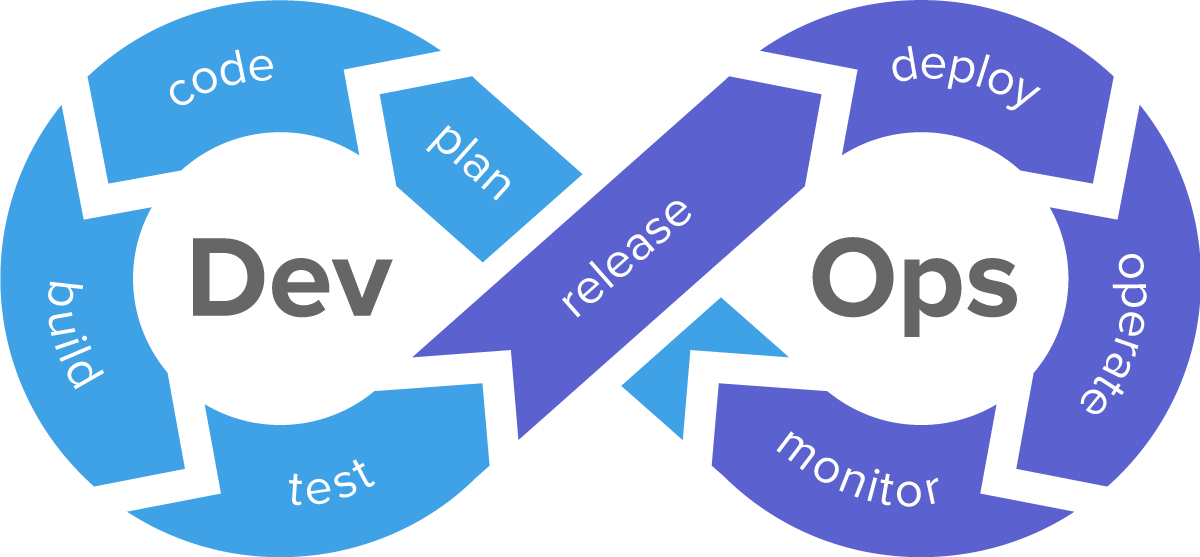
- 2+ Live Projects to understand the complete DevOps cycle like Coding, Building, Testing, Packaging, Releasing, Configuring & Monitoring Process
- Unique Course Content & Quality Materials to understand continuous integration & Testing Process
- Avail Group Discount with Small Batch & One to One Tutor
- Online DevOps Certification Training Courses at Low Cost by DevOps Technologies
- Get Self-Paced Videos & Free Interview Questions and answers
Who should go for the DevOps Certification Online Training Course?
Professional who can participate in this DevOps Certification Training course includes:
- IT Professionals
- Project Managers
- Solution Architects
- Application Developers
- Integration Specialists
- Automation Engineer
- DevOps Evangelist
- Product Stability Manager
- Experience Assurance professionals
- Software Tester
- IT Developers, Architects and Software Professionals
- Security Engineer
- Release Manager
- DevOps Architect
- Testing Professionals
- Integration Specialist
- System Administrator
- Infrastructure Engineer
- Network Administrator
- Engineering Manager
- Software Developers
- Technical Project Managers
- Operations Support
- Deployment engineers
- IT managers
- Development managers
What are the prerequisites for Online DevOps Certification Training?
- Basic Linux, networking, and coding knowledge
- Prior IT Experience
- Ability to work with Linux commands
- Proficiency in any one programming language
Even if you don’t possess the above perquisites, our DevOps Certificate trainer professionals will help you to start with all the basics and make you an expert in the DevOps Certified Engineer.
Why should you go for the DevOps Certification Course?
Here are a few unique reasons to choose DevOps Certification Training Course online.
- According to Forbes, more than 80% of the Fortune 500 companies are expected to adopt DevOps work culture by the end of 2019
- Currently, major companies such as BBC News, eBay, PayPal, Uber and more are extensively using DevOps.
- According to indeed.com, the average salary that is offered to a DevOps Engineer is around $136k per annum.
- IDC has estimated that the software market of DevOps is to reach $8 billion in 2020. It was $3.9 billion in the year 2017.
- TechRepublic has predicted that Jobs in DevOps has seen a huge demand this year when compared to previous years.
- Top MNC and IT software companies like Netflix, Wal-Mart, Amazon, Facebook make use of DevOps
The worth of DevOps professionals in the industry is comparatively high when compared to other related courses. - The position of DevOps Engineer ranks sixth in the list of Best Jobs on Glassdoor.
- DevOps ranks higher among the top 5 sought after skills.
What are the Top Companies looking for DevOps skilled professionals?
The demand for DevOps experts has increased by almost 80% in a year. Some of the leading companies that hire Data Science professionals include Google, Amazon, Accenture, Facebook, Mu-Sigma, Oracle, JP Morgan, IBM, Microsoft, etc.
How can I start a Career in DevOps Industry?
Since DevOps is an ecosystem of managing software development lifecycle and it involves various DevOps tools, technologies, and skills, so you will have to start by learning about some of them. If you’re looking forward to starting a career, the best way is to enroll in an immersive DevOps course training.
- Live Instructor-Led Online Training for DevOps practitioner certification
- 100+ Hours Hands-on Classes with Sample Projects
- Learn Basic to Advanced Level of DevOps Tools
- Real-Time Certified Professional DevOps Trainers
- Become a DevOps Certified Engineer in Just 6 Weeks
- The course aims to teach you the complete Knowledge on continuous delivery using DevOps
- Overall 30+ Batches Completed with 99% Success Rate
- Top DevOps Certification Training Courses from India by DevOps technologies
- Job Oriented DevOps Courses Online by Certified Experts
- Enroll and Become Master in DevOps Tools likes Docker, Jenkins, Github, Gitlab, Bitbucket, Ansible & Kubernetes
- Register for 1 Hour Demo Classes Before your enrollment.
- 2+ Live Projects to understand the complete DevOps cycle like Coding, Building, Testing, Packaging, Releasing, Configuring & Monitoring Process
- Unique Course Content & Quality Materials to understand continuous integration & Testing Process
- Avail Group Discount with Small Batch & One to One Tutor
- Online DevOps Certification Training Courses at Low Cost by DevOps Technologies
- Get Self-Paced Videos & Free Interview Questions and answers
DevOps Tools
Tool1: Git
Role of GIT in DevOps
GIT is a distributed version control system and open-source tool developed for efficiency and speed. It plays an important role in DevOps. Let’s check the role of Git in DevOps through the following case scenario.
Imagine you are writing some code in any language with three teams namely team 1, team2, and team3. All teams are from different countries and they make changes at different time intervals to the repository. You will explore the commented code within the system, you send different emails to your other teammates with project files to let them know about your updates, and you make use of telegram to send those files. Now, you cancel a file. In some point of need in the future, when you need the canceled fail or need to know the version of the canceled files, you will not be able to know as recovering those files are not possible.
How this problem can be solved? Yeah, a distributed version control tool like GIT can be the best solution to these issues. Version control is a system that helps to record all the changes done to the files, enables collaborative development (communication between development and operation teams) so that each of the teams can know about the other updates the peers are making to the files. It helps to know which team had made the changes and also what changes are made. Version control systems like GIT can also enable you to revert those changes easily.
GIT is the most preferred tool when compared to other distributed version control tools like Apache Subversion (SVN), Mercurial, and Concurrent Version Systems (CVS). Quora, Facebook, Salesforce are some of the top-notch organizations that make use of the GIT. You can check DevOps Certification training online if you need to know more information about the tools.
Tool 2: Maven
Role of Maven in DevOps
Maven is management, automation, and build tool developed by Apache Software Foundation. The tool is used in Java applications to help the collaborator (developer) in every step of the software project. It’s also used to manage projects written in Ruby, Scala, C#, and other languages. A DevOps Certification will help you to know about the role of Maven in DevOps clearly.
Case Scenario: Let’s assume you are going to work with a new project. In this case, you need third party libraries to get started.
- You are going to create a project in MySQL. In this case, you need a dependency MySQL-connector-java-5.1.21.jar.
- Similarly, if you are working with Spring MVC, you need about 10-12 third party libraries. Developers can download this from the net, but there is a severe problem in this case. Yeah, let’s consider you need to update your spring to the new version. So again, you need to download the third-party libraries from the net and then update. Also, you need to check whether your spring MVC matches with hibernates. This would be a pain for every developer.
To overcome this, Maven has come up with a depository that helps to provide the required JAVA files. Apache Maven stands as the best tool for automation, project standardization, and development incorporated in the last few years.
With Maven, it’s easy to control the versions used in the dependencies, analyze a dependency tree, monitor converge across modules, and more. This means its a more natural process and helps the DevOps agility aspects. If you prefer to know more about the role of Maven in DevOps, you can check out some of the DevOps training videos online.
What features make Maven the best over other build automation tools?
- Coherent site of project information: Maven can generate a PDF and a website with complete documentation using the same metadata used in the build process.
- Backward Compatibility: Maven also supports older versions. It can also port different project modules into maven 3 from Maven’s older version easily.
- Parallel Builds: The project dependency graph is analyzed by Maven and helps in building parallel schedule modules. It’s easy to achieve good improvement in the performance with these parallel builds.
- Model-Based Builds: Maven is capable of building a diverse range of projects into war, jar, metadata, and other predefined output types.
- Distribution Publication and Release Management: Maven integrates with CVS and other source control systems without any extra configuration. It also controls the project release.
- Better Integrity and Error Reporting: Maven helps in improvement in error reporting. It offers a link to the wiki page of Maven, where you can find all data and descriptions about the errors.
- Automatic Parent Versioning: There is no requirement to specify the parent in Maven’s submodule for the purpose of maintenance.
Tool 3: Jenkins
Role of Jenkins in DevOps:
Jenkins is a Continuous Integration, and an open-source tool is written in JAVA language. JENKINS achieves CI with the plug-in. It has plenty of plug-ins associated with them, and this improves its functionality. It is accepted as the best open source CI took due to its flexibility and tons of plug-in it supports.
Jenkins supports GIT, Maven, Selenium, Puppet, Ansible, Nagios, and other development deployment technologies. If you need to integrate any tool, you need to ensure whether the plug-in of the respective tool is installed in Jenkins. Take some of the DevOps Training videos on Jenkins role in DevOps online so that you will get a clear idea about the topic.
Case Scenario:
Let’s imagine there are set of developers A, B, and C. They are making commits to the course code present in the source code repository, which can be GIT repository or other ones. The complete source code in the application is built by tools like Ant, Maven, etc. The build application is deployed to the test server for testing. Now, let’s assume if there is any bug in the source code, the developers will be notified with the help of the feedback loop. In case there are no errors, then the application is deployed to the production server for the software release.
There are six main problems in this process. We can see it in the tabular column below. Before that, here is the process when there is Jenkins incorporated in the process.
As above, there is a group of developers who makes changes to the course code present in the source code repository. In case there is a Jenkins server, it pulls the source code repository at regular intervals to check if any of the developers have made changes to the source code.
In case, if any changes are made to the source code, then Jenkins servers pull those codes and prepare a build. The build results will be provided as a notification to the developers. To know more about Jenkin’s role in DevOps, you can take a DevOps Certification from the reputed training institute. So now, let’s check out what is the process before and after Jenkins.
What features make Jenkins the best over other continuous integration tools?
- Easy Installation: Jenkins, being the self-contained Java-based program, it contains packages for windows that are ready to run.
- Plug-in: It has tons of plug-in associated with them in the Update Center. It combines with all tools present within the Continuous Integration and Continuous Deployment toolchain.
- Distributed: It works on distributed machines efficiently and therefore helps in rapid builds, deployments, tests across various platforms.
- Easy Configuration: Set up, and configuration is made more natural with built-in help, error checks, and other web interfaces.
- Extensible: Jenkins contains plug-in architecture, which offers any number of possibilities for the tasks to perform.
Tool 4: Anisible
Role of Ansible in DevOps:
Ansible is an open-source IT automation engine used to enhance the reliability, consistency, and scalability of your IT environment. Ansible is used to automate three different tasks, namely Provisioning, Configuration Management, and Application Deployment.
Ansible automates the configuration of different devices and systems like storage devices, firewalls, databases, networks, and more. It also automates IT environments where they are hosted in the cloud or on the virtualization platforms or traditional bare-metal servers.
Case Scenario:
Let’s say there is a system administrator named jack, who is entirely responsible for looking after the entire infrastructure of his company. In case there are fewer servers, then the process of handling them might be more comfortable.
What if there are multiple servers, e.g., two database servers and three web servers. In this case, Jack has to repeat the same task multiple times for each server for the work to be done. Apart from that, there are high chances for errors to occur as humans are prone to mistakes.
There is a solution for the above problem, yeah, its Ansible. It’s essential to know the role of Ansible in DevOps. In DevOps, the operation and development work is combined. This combination is vital for a new test-driven application design. Ansible help in this integration process by offering a stable environment to both operations and development, leading to smooth orchestration.
When Ansible is used, it automatically creates a single code for the installation and can be deployed multiple times. It means that Jack can now spend time on other productive tasks like experimenting, less time in fixing issues, performance tuning, getting things done quickly, etc. rather than working on the same job repeatedly. If you need to know more about the role of Ansible in DevOps, you can check some of the DevOps Certification that deals with Ansible.
What features make Ansible the best over other Open Source IT Engine tools?
- Simple: Ansible makes use of Simple Syntax Playbooks written in YAML. It’s a data serialization language that makes the data simple to read by humans. There are no requirements for any coding skills. Even people who are not aware of Ansible can read the playbook and understand what the process is.
- Flexible and Powerful: Ansible includes powerful and advanced features that help you to model even the complicated IT workflows.
- Agentless: Ansible is considered as entirely agentless tools. There is no software or agents or any extra firewall ports that you need to make use or install on the host or client system, which you require to automate. It decreases the team effort required to start the automation immediately.
- Efficiently: There are more resources available for your applications as there is no software installed on your servers. The modules in Ansible work through JSON, and therefore it is extensible with modules that are written in a programming language that the user knows.
- Simple Grouping: With the help of provisioning, Configuration Management, Application Deployment, Security & Compliance, and Orchestration, the group is made simple.
Tool 5: Docker
Role of DOCKER in DevOps:
Docker is a container management service and software that helps developers to develop applications and ship them into a container. To execute your applications, Docker offers a centralized platform and wrap components of any software into a complete standardized unit that holds everything like runtime environment, libraries, tools, or code to run. It can be deployed anytime and anywhere.
Case Scenario:
Imagine yourself as a developer who makes different websites for your clients. Say, you are now making a website in PHP. The first thing you do is write code for the site. It’s common for every developer to aware of three critical components, namely the operating system, the software, and third-party libraries when creating a website.
Now, you are going to create a website in PHP, so you are considering OS, PHP Software to be installed in the Operating System, and third-party libraries needed to make a website in PHP. When you run the code, you will find the code working.
Now, you are providing the code to the operator for testing. The operator will check if he has all three components that the developer had in his system so that the operator can get the same result as the developer.
It’s vital that the operator should have the same version of PHP software as per the developer. The code won’t run even if the version differs. Many say you can quickly provide the same PHP Software version to the operator through Virtual Machine. But the problem again is that the file name is too large, and therefore there is no chance for sending the exact version of PHP Software to the operators.
So, how to solve this problem efficiently? Yeah, through Docker! Docker holds an entity with all software dependencies like the operating system, software, and third-party libraries. Another important problem faced before using Docker is file size and portability.
In the case of using Docker, the plug & play package is used to make the portability easier. It holds everything like testing or staging environment, production environment, and developing environment; therefore, the problem is easily solved. Now when the operator runs the code, he quickly gets the solution the same as the developer has received.
It’s mandatory now to check the role of Docker in DevOps. The Container Management tool is used in DevOps to manage the software as self-sufficient and isolated containers, which can be tested, deployed, and run in all types of environments. Docker in DevOps helps to decrease back and forth between Ops and Dec in Continuous Deployment, which cuts operational costs and eliminated overheads. To know more about the role of Docker in DevOps, you can consider checking out some of the Docker Certification Training courses online.
What features make Docker the best over other Container Management tools?
- Faster and Easy Configuration: Docker helps in configuring the system faster and efficiently. Docker can be used in different environments, and the infrastructure requirements are not linked with the application environment. It’s easy to deploy the code without any effort, and it can be done in less time.
- Application Isolation: Docker offers containers; this is used to deploy applications in the isolation environment. Each container acts independent and enables the user to execute all applications.
- Routing Mesh: The feature allows the connection even if there is no task present on the node. It helps to route the incoming requests for the available nodes on a published port to an active container.
- Security Management: It enables us to save secrets into the swarm and select to provide access to the services to particular secrets.
- Increased Productivity: It makes the rapid deployment and technical configuration of application more accessible.
DevOps: Trainer Profile
Our Trainers provide complete freedom to the students, to explore the subject and learn based on real-time examples. Our trainers help the candidates in completing their projects and even prepare them for interview questions and answers. Candidates are free to ask any questions at any time.
- More than 7+ Years of Experience.
- Trained more than 2000+ students in a year.
- Strong Theoretical & Practical Knowledge.
- Certified Professionals with High Grade.
- Well connected with Hiring HRs in multinational companies.
- Expert level Subject Knowledge and fully up-to-date on real-world industry applications.
- Trainers have Experienced on multiple real-time projects in their Industries.
- Our Trainers are working in multinational companies such as CTS, TCS, HCL Technologies, ZOHO, Birlasoft, IBM, Microsoft, HP, Scope, Philips Technologies etc
Key Features of DevOps Course Training
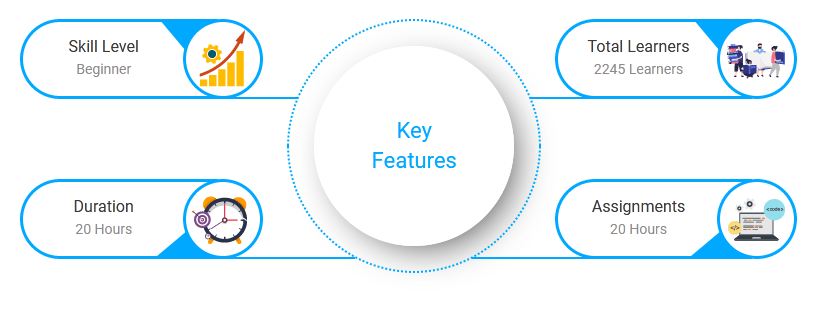
There are many reasons why you should choose Sri Vidya Technologies for the best DevOps Certification Training Course online. Here are our best features included in our DevOps training.
- 24/7 Support
- Highly qualified and professional DevOps experts
- DevOps online training curriculum with the latest industry standards
- 100% hands-on Online DevOps training.
- Lifetime access to self-paced learning.
- Weekend Mentoring Sessions
- Flexible Schedule to choose their preferred classes
- 100% job assistance and DevOps certification
- Real-time projects with exercises and project work.
- Self paces videos & Instructor-Led Training
DevOps Online Certification Training
This DevOps Online Training course is designed to make an individual expert in all DevOps Concepts starting from the Basics to advanced. Learn DevOps- the latest field that links software developers and operations. DevOps is a collaboration between developments & operations that enhance productivity for both teams, results in quicker deploys, and inserts automation into the lifecycle of an application.
What is DevOps?
DevOps is an emerging set of methods, principles, and practices for collaboration, communication, and integration between software development and IT operations professionals. It has developed because of the emerging understanding of the importance and interdependence of both the development and operations disciplines in meeting an enterprise goal of rapidly producing software products and services. It mainly decreases the complexity of problems and gives a quicker solution and a more stable operating environment. It mainly helps in the alignment of goals and improving the code quality that allows for rapid delivery. Most of the companies are investing in this technology to get the practices done in a reliable and simple way. This course is structured in such a way to provide quality subject knowledge to the desired candidates to become an expert developer in DevOps technology. There are huge opportunities for certified DevOps individuals after the completion of this course.
DevOps Job Opportunites?
There is a high demand for professionals who understand both the development and operational side of the software development and deployment process, making this DevOps course the best fit for those who want to improve their marketability for these high-income roles. DevOps career opportunities are thriving globally. DevOps professionals are highly paid and in great demand in a wide range of MNCs. Today DevOps help businesses to improve their software security and quality. The high performance of DevOps offers improved business results as measured by productivity, profitability and market share. As DevOps came into existence, the number of people working on DevOps increases rapidly. In the year 2014, only 16% worked on DevOps teams, and now it has risen to more than 27%. You will grab the best jobs in top MNCs after completing this DevOps Online Training.
- DevOps was considered as one of the 11 best jobs in the USA for 2017, according to CBS News.
- DevOps experts are among the highest paid IT professionals today with salaries ranging till $110K and the market demand for them is growing rapidly- indeed job portal
- DevOps jobs are the 3rd highest tech role ranked by employer demand on Indeed.com but have the 2nd highest talent deficit.
- An average salary of DevOps Managers is $122,234 per year, and that of DevOps engineers is $151,461- Payscale.com.
Most Common Questions for DevOps Certification
What if I miss a DevOps Training class from Sri Vidya Technologies?
The attendee can attend the missed session in any of the live batches or else view the missed class recorded session in your LMS.
Can the attendees access the course materials even after completing the DevOps Certification Training?
Yes, Sri Vidya technologies provide lifetime access to the attendees once they join the DevOps Certification course.
What is the overall cost of DevOps Certification?
Sri Vidya Technologies DevOps Certification cost about Rs 19,995 as it holds on-demand and dedicated support to helps attendees and lifetime access to the DevOps course training materials.
Why is DevOps Online training better than offline Training?
- All attendees are provided with extra advantages like the best quality, convenience, and 24/7 support system in DevOps online training.
- We also offer Recorded video sessions that can be used if the attendees miss any of the classes.
- The course materials are provided to the attendees so that they can refer them anytime online.
What does DevOps Engineer perform?
- The main goal of a DevOps engineer is to communicate in a user-friendly way.
- They bridge the gap between the IT operations and development teams.
- DevOps Engineers are also excellent collaborators as they work alone most of the time.
What skills should DevOps Engineer have?
- A DevOps Engineer needs to be an expert in deployment, testing, and development technologies.
- A DevOps Engineer should possess experience in CI/CD pipeline development and maintenance.
- A DevOps Engineer should be proficient in Linux Fundamentals and have knowledge of at least one Scripting language like Shell or Python.
- A DevOps Engineer should possess good experience in different DevOps tools like Jenkins, Selenium, Chef, Nagios, Git, Docker, Puppet, and Kubernetes.
How long will it take to complete the DevOps Certification training course?
It takes around 6 weeks to complete the DevOps Certification training course from Sri Vidya Technologies.
Do you provide job assurance with your Job Assistance program?
We share your CV to top MNS and IT solution recruiters. We also help you to create the best resume format, make you prepare for the interview questions to get placed by top potential recruiters.
What are the different training modes offered by Sri Vidya Technologies?
- Self Paced Training
- Instructor-led Online Training
- Classroom Online Training
- Corporate Training
- Customized Syllabus Training
Why should I take online DevOps certification training from Sri Vidya Technologies?
- Sri Vidya Technologies offers exhaustive DevOps certification course training in the form of a comprehensive online classroom program where the participants gather in a virtual environment without being physically present. So the participants can attend this classroom program from anywhere.
- By signing up for the course, the learners can upskill their DevOps skills.
- As part of the DevOps training classes, you will learn the key DevOps concepts and tools including Git, Jenkins, Docker, Ansible, Puppet, Kubernetes and Nagios and more.
- The entire training is designed keeping in mind the latest industry skills.
- Upon the completion of the course, you can apply for some of the best jobs in top MNCs around the world at top salaries!
- Sri Vidya Technologies offers lifetime access to course contents, 24/7 learning support, and free course material upgrades at no extra cost.
What different DevOps certification training modes does Sri Vidya Technologies offer?
At Sri Vidya Technologies, you can sign up for live instructor-led online DevOps training or you can also choose self-paced courses. In addition to this, Sri Vidya Technologies provides corporate training to organizations that are looking to upskill the DevOps knowledge of their employees. Our trainers are working professionals who have more than 20 years of training experience.
What is Sri Vidya Technologies’s online DevOps Training?
Our online DevOps Certification course is an exact replica of physical classroom training that allows trainers and learners to participate at the same time. As a learner, you can log in from anywhere and interact with your trainer without having to be present in person.
You can ask questions or start a discussion at any time in your DevOps course training. We also record DevOps classes so you can view them again to update your learning. In addition, you can sign up for our DevOps online weekend course, if you are a working professional.
What kind of projects are included as part of the Training?
You will work on at least three real-world projects that will give you hands-on experience with DevOps technologies via step-by-step instructions. You will get real-world exposure by working on the projects that will prepare you for real-time business problems.
After completing the course, you can unlock your DevOps certificate from Sri Vidya Technologies and show it to potential employers by sharing it on LinkedIn. For more information on the project types, please go to the DevOps certification project section.
Can I request a one-on-one support session if I want to get a better understanding of the topics?
Yes, Sri Vidya Technologies provides 24/7 query resolution support. You can always get a ticket from the responsible support team. You can also use email support for all queries. All you will have to do so drop an email if you have any query and our support team will reply to you at the earliest. If your request cannot be resolved by email, we can also arrange a one-on-one interview with the technical team.
You will be happy to learn that you can contact Sri Vidya Technologies support even after completing your DevOps training.
Does Sri Vidya Technologies provide job assistance?
Yes, Sri Vidya Technologies offers placement support after the successful completion of the DevOps Certification program. The only criteria to avail this opportunity is to complete the entire course and execute all the projects successfully, which in turn must be approved by the instructor.
To help you in your endeavor to get lucrative jobs, we are exclusively tied-up more than 80 leading MNCs from all around the world. Our alumni work in top organizations like IBM, Sony, TCS, Standard Chartered, Cisco, Mu Sigma, Cognizant, Infosys, and more.
Is it possible to switch from self-paced training to instructor-led training?
Yes, you can switch from self-paced learning mode to instructor-led learning mode by paying the differential amount and joining the next available batch.
What should be my system’s requirements to take part in this DevOps training?
Participating in our online DevOps course training requires Windows XP SP3 (or higher) Mac OSX 10.6 (or higher), good internet connectivity, headphones/earphones/speakers, and microphones.
How does Sri Vidya Technologies issue DevOps Training course completion certificate?
Once you have completed the Sri Vidya Technologies DevOps training program, projects, tests, and assignments, and have achieved at least 60% of the qualifying exam scores; you will receive a certificate verified by Sri Vidya Technologies. Our course certificate is valid for life and you can use it to showcase your DevOps skills to your potential employers or hiring managers.
How effective are Sri Vidya Technologies’s DevOps Certification Course’s materials?
Our DevOps certification course is designed by industry experts and professionals, to ensure that you gain all the relevant industry-centric knowledge. We make sure that you get all the required theoretical knowledge along with the practical knowledge that DevOps professionals. Through our live sessions, training videos, hands-on projects experience, assignments, and simulation tests, you can pass the exam comfortably and get lucrative jobs.
How do I pass the DevOps Certification Exam?
Sri Vidya Technologies’s DevOps Certification exam is of 105 minutes duration with 60 multiple-choice questions (it may vary with updates). The score for passing the exam is 65%, with a minimum of 39 questions answered correctly. If you meet this passing criterion, you will be rewarded with the DevOps Certification.
Are you looking for exciting offers?
Call now: +91-7207321110 and know the exciting offers available for you!
Why should I learn this course from Sri VidyaTechnologies?
Sri Vidya Technologies offers 250+ IT training courses in more than 20+ branches all over India with 10+ years of Experienced Expert level Trainers.
- Fully hands-on training
- 30+ hours course duration
- Industry expert faculties
- Completed 1500+ batches
- 100% job oriented training
- Certification guidance
- Own course materials
- Resume editing
- Interview preparation
- Affordable fees structure
Does Sri VidyaTechnologies offer placement assistance after course completion?
Sri VidyaTechnologies is the Legend in offering placement to the students. Please visit our Placed Students List on our website.
- More than 2000+ students placed in last year.
- We have a dedicated placement portal which caters to the needs of the students during placements.
- Besant Technologies conducts development sessions including mock interviews, presentation skills to prepare students to face a challenging interview situation with ease.
- 92% percent placement record
1000+ interviews organized
Who is my trainer and how are they selected?
- Our trainers are more than 10+ years of experience in course relavent technologies.
- Trainers are expert level and fully up-to-date in the subjects they teach because they continue to spend time working on real-world industry applications.
- Trainers have experienced on multiple real-time projects in their industries.
- Are working professionals working in multinational companies such as CTS, TCS, HCL Technologies, ZOHO, Birlasoft, IBM, Microsoft, HP, Scope, Philips Technologies, etc…
- Trained more than 2000+ students in a year.
- Strong theoretical & practical knowledge.
- Are certified professionals with high grade.
- Are well connected with hiring HRs in multinational companies.
What if I miss a session?
No worries. Sri Vidya technologies assure that no one misses single lectures topics. We will reschedule the classes as per your convenience within the stipulated course duration with all such possibilities. If required you can even attend that topic with any other batches.
What are the different modes of training that Sri Vidya Technologies provides?
Sri Vidya Technologies provides many suitable modes of training to the students like
- Classroom training
- One to One training
- Fast track training
- Live Instructor LED Online training
- Customized training
What certification will I receive after course completion?
You will receive Sri Vidya Technologies globally recognized course completion certification.
How about group discounts (or) corporate training for our team?
Yes, Sri Vidya Technologies provides group discounts for its training programs. To get more details, visit our website and contact our support team via Call, Email, Live Chat option or drop a Quick Enquiry. Depending on the group size, we offer discounts as per the terms and conditions.
What are the payment options?
We accept all major kinds of payment options. Cash, Card (Master, Visa, and Maestro, etc), Net Banking and etc.
I have more queries?
Please Contact our course advisor+91-7207321110. Or you can share your queries through info@srividyatechnologies.com
DevOps Course Overview
Learn DevOps Online Training from Professional Trainers. We Offered DevOps practitioner certification online Training with Live Real-Time Projects to understand better. Start your Trial Devops Class for free of Cost Offered by DevOps technologies. Get In-Depth Practical Knowledge on DevOps Process like Continuous Integration, Continuous Testing & Monitoring Tools with our one month Course. From this DevOps Online Training Course you will get the complete knowledge on Docker, Puppet, Chef, Jenkins, GitHub, Kubernetes, Ansible, Maven, Selenium, and Nagios Tools with 20 Hours Live Projects.
This Online Devops Course is designed as to make you DevOps Certified Engineer in Just 6 weeks of Training at Low-Cost Fee. Enroll for DevOps Training and Become Modern Software engineer to shorten the old SDLC Process in the Software Industry. Register for Online DevOps Training Course a Highly Paid Technology now in the Software field and Start your Dream Career in Top MNC Like Amazon, Flipkart, Google, Microsoft and Infosys.
DevOps Training and Certification Course also help to learn about the infrastructure scalability, servers, and availability. The candidate will receive a course completion certificate from DevOps Technologies once they complete the DevOps online training successfully. According to Payscale.com, the final average salary for online DevOps Certification Engineer in India is 658,143 INR. Our trainers are subject matter experts and have more than a decade of experience in respective fields of study.
Program USP:
- Instructor-led online training
- Practice tests and project work
- Job assistance
- Flexible timing
- Free lifetime upgrade
- 24/7 access to course materials
- Round the clock support
DevOps Certification Course
This DevOps Training and Certification Course will make you master in the various aspects of the principles of continuous development and deployment, software development operations, continuous integration, Continuous Monitoring, inter-team collaboration, IT service agility, Source Code Management, Building CI / CD pipelines, automation of configuration management and learn the various DevOps tools like Git, Docker, Jenkins, Nagios, Puppet, Ansible, Chef, Maven, GitHub, and Kubernetes. DevOps jobs are among the most sought-after and high paying jobs in the industry. DevOps Technologies certifies- you as a “DevOps Engineer” on the successful submission of the DevOps project. This certification equips you to secure a good job in an MNC. So, what are you waiting for? Start on your path today.
The ideal DevOps expert has multidisciplinary knowledge about infrastructure, development and configuration management. DevOps Training & Certification Course has been designed keeping in mind the latest market trend and to understand the importance of DevOps. This training would allow you to grasp the concepts of how DevOps transformation can assist focus on value and streamline delivery and also learn about the common infrastructure servers, availability, and scalability which will be another feature of this training program. This DevOps Online Training is curated by industry professionals to make you understand the Real-Time IT Problems and Scenarios.
About DevOps Certification Training Course
Online DevOps Certification Course helps you understand expert level concepts in DevOps. It provides an in-depth knowledge of the technology and ideas behind the tools like Git, Docker, Puppet, Nagios, Ansible, and Kubernetes. The DevOps Certification will make you proficient in the automation of configuration management, IT service agility, principles of continuous development and deployment, using various DevOps tools.
Apart from that, you will also learn about the different delivery models in DevOps. Online DevOps Training and Certification helps to know about the container, and its operation performed in-depth. Upon completion of the DevOps training online, the candidate will become an expert in implementing the principles of DevOps in real-world industry scenarios.
DevOps Technologies provides live DevOps Certification Training to help you become a prestigious DevOps Architect. By enrolling in this online DevOps course will make you an expert in the methodologies of Continuous Development, Continuous Deployment, Configuration Management, Continuous Testing, and Continuous Monitoring by using the essential DevOps tools.
What you Learn from this DevOps Certification Training Course
DevOps Technologies Online DevOps Training & Certification Course enables you to master the complete anatomy of DevOps culture. It helps in enhancing collaboration between the Ops team, testing, and development in an IT environment. Our DevOps online training is designed based on the latest industry specification and requirements. This course has been curated to help you gain the most in-demand skill set for becoming a DevOps Architect. In this DevOps online course, you will learn the following aspects.
- Implementing Version Control
- Containerization using Docker
- CICD Pipelines using Jenkins
- Configuration Management using Ansible and Puppet
- Automating Build and test using selenium and Maven
- Container Orchestration using Kubernetes
- Manage project through standard and open based platform.
- Decrease development cost and enhance quality with collaboration.
- Make use of the best cloud security solution services by ensuring important system resolution.
- Perform problem-solving and system troubleshooting across application domains and platforms.
- Improve project visibility.
- Focus on the intent of the business.
- Implement knowledge of DevOps process and methodologies.
- Proficient in leveraging CD and CI tools to automate deployment and testing.
- Support external and internal customers on various platforms.
- Develop methods and tools to enhance and drive customer experience.
- Create feedback funnels.
- Get involved with the database administration process and code deployment.
- Ability to create scripts to check the system health, respond to alerts, and also check different application subsystems.
- Measure application performance.
- Improve productivity and collaboration by automating workflows and infrastructure.
- Understand the DevOps Tools and DevOps Concepts.
- Implement a DevOps lifecycle and automated system update.
- Software version control and Build management.
- Understand virtualization & performance fine-tuning.
- How to configure and install infrastructure servers.
- Providing the perfect security for the complete infrastructure
- Communication, workflow, & feedback loop optimization.
- DevOps performance metrics monitoring.
- Get the experience of working on an industry-standard live Project.
What are the Objectives of DevOps Online Training?
This DevOps Certification training course by DevOps Technologies will help you kickstart your career in DevOps, an outstanding field that has been bridging gaps between the software developers and operations professionals. In this course, you will learn about all the important tools in DevOps such as Git, Puppet, Docker, Ansible, Kubernetes, Jenkins, Maven, Nagios, and Selenium. A complete hands-on training designed in such a manner that you become a master in the complete software development life cycle.
Who should go for the DevOps Certification Online Training Course?
Professional who can participate in this DevOps Certification Training course includes:
- IT Professionals
- Project Managers
- Solution Architects
- Application Developers
- Integration Specialists
- Automation Engineer
- DevOps Evangelist
- Product Stability Manager
- Experience Assurance professionals
- Software Tester
- IT Developers, Architects and Software Professionals
- Security Engineer
- Release Manager
- DevOps Architect
- Testing Professionals
- Integration Specialist
- System Administrator
- Infrastructure Engineer
- Network Administrator
- Engineering Manager
- Software Developers
- Technical Project Managers
- Operations Support
- Deployment engineers
- IT managers
- Development managers
What are the prerequisites for Online DevOps Certification Training?
- Basic Linux, networking, and coding knowledge
- Prior IT Experience
- Ability to work with Linux commands
- Proficiency in any one programming language
Even if you don’t possess the above perquisites, our DevOps Certificate trainer professionals will help you to start with all the basics and make you an expert in the DevOps Certified Engineer.
Why should you go for the DevOps Certification Course?
Here are a few unique reasons to choose DevOps Certification Training Course online.
- According to Forbes, more than 80% of the Fortune 500 companies are expected to adopt DevOps work culture by the end of 2019
- Currently, major companies such as BBC News, eBay, PayPal, Uber and more are extensively using DevOps.
- According to indeed.com, the average salary that is offered to a DevOps Engineer is around $136k per annum.
- IDC has estimated that the software market of DevOps is to reach $8 billion in 2020. It was $3.9 billion in the year 2017.
- TechRepublic has predicted that Jobs in DevOps has seen a huge demand this year when compared to previous years.
- Top MNC and IT software companies like Netflix, Wal-Mart, Amazon, Facebook make use of DevOps
The worth of DevOps professionals in the industry is comparatively high when compared to other related courses. - The position of DevOps Engineer ranks sixth in the list of Best Jobs on Glassdoor.
- DevOps ranks higher among the top 5 sought after skills.
What are the Top Companies looking for DevOps skilled professionals?
The demand for DevOps experts has increased by almost 80% in a year. Some of the leading companies that hire Data Science professionals include Google, Amazon, Accenture, Facebook, Mu-Sigma, Oracle, JP Morgan, IBM, Microsoft, etc.
How can I start a Career in DevOps Industry?
Since DevOps is an ecosystem of managing software development lifecycle and it involves various DevOps tools, technologies, and skills, so you will have to start by learning about some of them. If you’re looking forward to starting a career, the best way is to enroll in an immersive DevOps course training.
- Live Instructor-Led Online Training for DevOps practitioner certification
- 100+ Hours Hands-on Classes with Sample Projects
- Learn Basic to Advanced Level of DevOps Tools
- Real-Time Certified Professional DevOps Trainers
- Become a DevOps Certified Engineer in Just 6 Weeks
- The course aims to teach you the complete Knowledge on continuous delivery using DevOps
- Overall 30+ Batches Completed with 99% Success Rate
- Top DevOps Certification Training Courses from India by DevOps technologies
- Job Oriented DevOps Courses Online by Certified Experts
- Enroll and Become Master in DevOps Tools likes Docker, Jenkins, Github, Gitlab, Bitbucket, Ansible & Kubernetes
- Register for 1 Hour Demo Classes Before your enrollment.
- 2+ Live Projects to understand the complete DevOps cycle like Coding, Building, Testing, Packaging, Releasing, Configuring & Monitoring Process
- Unique Course Content & Quality Materials to understand continuous integration & Testing Process
- Avail Group Discount with Small Batch & One to One Tutor
- Online DevOps Certification Training Courses at Low Cost by DevOps Technologies
- Get Self-Paced Videos & Free Interview Questions and answers
Who should go for the DevOps Certification Online Training Course?
Professional who can participate in this DevOps Certification Training course includes:
- IT Professionals
- Project Managers
- Solution Architects
- Application Developers
- Integration Specialists
- Automation Engineer
- DevOps Evangelist
- Product Stability Manager
- Experience Assurance professionals
- Software Tester
- IT Developers, Architects and Software Professionals
- Security Engineer
- Release Manager
- DevOps Architect
- Testing Professionals
- Integration Specialist
- System Administrator
- Infrastructure Engineer
- Network Administrator
- Engineering Manager
- Software Developers
- Technical Project Managers
- Operations Support
- Deployment engineers
- IT managers
- Development managers
What are the prerequisites for Online DevOps Certification Training?
- Basic Linux, networking, and coding knowledge
- Prior IT Experience
- Ability to work with Linux commands
- Proficiency in any one programming language
Even if you don’t possess the above perquisites, our DevOps Certificate trainer professionals will help you to start with all the basics and make you an expert in the DevOps Certified Engineer.
Why should you go for the DevOps Certification Course?
Here are a few unique reasons to choose DevOps Certification Training Course online.
- According to Forbes, more than 80% of the Fortune 500 companies are expected to adopt DevOps work culture by the end of 2019
- Currently, major companies such as BBC News, eBay, PayPal, Uber and more are extensively using DevOps.
- According to indeed.com, the average salary that is offered to a DevOps Engineer is around $136k per annum.
- IDC has estimated that the software market of DevOps is to reach $8 billion in 2020. It was $3.9 billion in the year 2017.
- TechRepublic has predicted that Jobs in DevOps has seen a huge demand this year when compared to previous years.
- Top MNC and IT software companies like Netflix, Wal-Mart, Amazon, Facebook make use of DevOps
The worth of DevOps professionals in the industry is comparatively high when compared to other related courses. - The position of DevOps Engineer ranks sixth in the list of Best Jobs on Glassdoor.
- DevOps ranks higher among the top 5 sought after skills.
What are the Top Companies looking for DevOps skilled professionals?
The demand for DevOps experts has increased by almost 80% in a year. Some of the leading companies that hire Data Science professionals include Google, Amazon, Accenture, Facebook, Mu-Sigma, Oracle, JP Morgan, IBM, Microsoft, etc.
How can I start a Career in DevOps Industry?
Since DevOps is an ecosystem of managing software development lifecycle and it involves various DevOps tools, technologies, and skills, so you will have to start by learning about some of them. If you’re looking forward to starting a career, the best way is to enroll in an immersive DevOps course training.
- Live Instructor-Led Online Training for DevOps practitioner certification
- 100+ Hours Hands-on Classes with Sample Projects
- Learn Basic to Advanced Level of DevOps Tools
- Real-Time Certified Professional DevOps Trainers
- Become a DevOps Certified Engineer in Just 6 Weeks
- The course aims to teach you the complete Knowledge on continuous delivery using DevOps
- Overall 30+ Batches Completed with 99% Success Rate
- Top DevOps Certification Training Courses from India by DevOps technologies
- Job Oriented DevOps Courses Online by Certified Experts
- Enroll and Become Master in DevOps Tools likes Docker, Jenkins, Github, Gitlab, Bitbucket, Ansible & Kubernetes
- Register for 1 Hour Demo Classes Before your enrollment.
- 2+ Live Projects to understand the complete DevOps cycle like Coding, Building, Testing, Packaging, Releasing, Configuring & Monitoring Process
- Unique Course Content & Quality Materials to understand continuous integration & Testing Process
- Avail Group Discount with Small Batch & One to One Tutor
- Online DevOps Certification Training Courses at Low Cost by DevOps Technologies
- Get Self-Paced Videos & Free Interview Questions and answers
DevOps Tools
Tool1: Git
Role of GIT in DevOps
GIT is a distributed version control system and open-source tool developed for efficiency and speed. It plays an important role in DevOps. Let’s check the role of Git in DevOps through the following case scenario.
Imagine you are writing some code in any language with three teams namely team 1, team2, and team3. All teams are from different countries and they make changes at different time intervals to the repository. You will explore the commented code within the system, you send different emails to your other teammates with project files to let them know about your updates, and you make use of telegram to send those files. Now, you cancel a file. In some point of need in the future, when you need the canceled fail or need to know the version of the canceled files, you will not be able to know as recovering those files are not possible.
How this problem can be solved? Yeah, a distributed version control tool like GIT can be the best solution to these issues. Version control is a system that helps to record all the changes done to the files, enables collaborative development (communication between development and operation teams) so that each of the teams can know about the other updates the peers are making to the files. It helps to know which team had made the changes and also what changes are made. Version control systems like GIT can also enable you to revert those changes easily.
GIT is the most preferred tool when compared to other distributed version control tools like Apache Subversion (SVN), Mercurial, and Concurrent Version Systems (CVS). Quora, Facebook, Salesforce are some of the top-notch organizations that make use of the GIT. You can check DevOps Certification training online if you need to know more information about the tools.
Tool 2: Maven
Role of Maven in DevOps
Maven is management, automation, and build tool developed by Apache Software Foundation. The tool is used in Java applications to help the collaborator (developer) in every step of the software project. It’s also used to manage projects written in Ruby, Scala, C#, and other languages. A DevOps Certification will help you to know about the role of Maven in DevOps clearly.
Case Scenario: Let’s assume you are going to work with a new project. In this case, you need third party libraries to get started.
- You are going to create a project in MySQL. In this case, you need a dependency MySQL-connector-java-5.1.21.jar.
- Similarly, if you are working with Spring MVC, you need about 10-12 third party libraries. Developers can download this from the net, but there is a severe problem in this case. Yeah, let’s consider you need to update your spring to the new version. So again, you need to download the third-party libraries from the net and then update. Also, you need to check whether your spring MVC matches with hibernates. This would be a pain for every developer.
To overcome this, Maven has come up with a depository that helps to provide the required JAVA files. Apache Maven stands as the best tool for automation, project standardization, and development incorporated in the last few years.
With Maven, it’s easy to control the versions used in the dependencies, analyze a dependency tree, monitor converge across modules, and more. This means its a more natural process and helps the DevOps agility aspects. If you prefer to know more about the role of Maven in DevOps, you can check out some of the DevOps training videos online.
What features make Maven the best over other build automation tools?
- Coherent site of project information: Maven can generate a PDF and a website with complete documentation using the same metadata used in the build process.
- Backward Compatibility: Maven also supports older versions. It can also port different project modules into maven 3 from Maven’s older version easily.
- Parallel Builds: The project dependency graph is analyzed by Maven and helps in building parallel schedule modules. It’s easy to achieve good improvement in the performance with these parallel builds.
- Model-Based Builds: Maven is capable of building a diverse range of projects into war, jar, metadata, and other predefined output types.
- Distribution Publication and Release Management: Maven integrates with CVS and other source control systems without any extra configuration. It also controls the project release.
- Better Integrity and Error Reporting: Maven helps in improvement in error reporting. It offers a link to the wiki page of Maven, where you can find all data and descriptions about the errors.
- Automatic Parent Versioning: There is no requirement to specify the parent in Maven’s submodule for the purpose of maintenance.
Tool 3: Jenkins
Role of Jenkins in DevOps:
Jenkins is a Continuous Integration, and an open-source tool is written in JAVA language. JENKINS achieves CI with the plug-in. It has plenty of plug-ins associated with them, and this improves its functionality. It is accepted as the best open source CI took due to its flexibility and tons of plug-in it supports.
Jenkins supports GIT, Maven, Selenium, Puppet, Ansible, Nagios, and other development deployment technologies. If you need to integrate any tool, you need to ensure whether the plug-in of the respective tool is installed in Jenkins. Take some of the DevOps Training videos on Jenkins role in DevOps online so that you will get a clear idea about the topic.
Case Scenario:
Let’s imagine there are set of developers A, B, and C. They are making commits to the course code present in the source code repository, which can be GIT repository or other ones. The complete source code in the application is built by tools like Ant, Maven, etc. The build application is deployed to the test server for testing. Now, let’s assume if there is any bug in the source code, the developers will be notified with the help of the feedback loop. In case there are no errors, then the application is deployed to the production server for the software release.
There are six main problems in this process. We can see it in the tabular column below. Before that, here is the process when there is Jenkins incorporated in the process.
As above, there is a group of developers who makes changes to the course code present in the source code repository. In case there is a Jenkins server, it pulls the source code repository at regular intervals to check if any of the developers have made changes to the source code.
In case, if any changes are made to the source code, then Jenkins servers pull those codes and prepare a build. The build results will be provided as a notification to the developers. To know more about Jenkin’s role in DevOps, you can take a DevOps Certification from the reputed training institute. So now, let’s check out what is the process before and after Jenkins.
What features make Jenkins the best over other continuous integration tools?
- Easy Installation: Jenkins, being the self-contained Java-based program, it contains packages for windows that are ready to run.
- Plug-in: It has tons of plug-in associated with them in the Update Center. It combines with all tools present within the Continuous Integration and Continuous Deployment toolchain.
- Distributed: It works on distributed machines efficiently and therefore helps in rapid builds, deployments, tests across various platforms.
- Easy Configuration: Set up, and configuration is made more natural with built-in help, error checks, and other web interfaces.
- Extensible: Jenkins contains plug-in architecture, which offers any number of possibilities for the tasks to perform.
Tool 4: Anisible
Role of Ansible in DevOps:
Ansible is an open-source IT automation engine used to enhance the reliability, consistency, and scalability of your IT environment. Ansible is used to automate three different tasks, namely Provisioning, Configuration Management, and Application Deployment.
Ansible automates the configuration of different devices and systems like storage devices, firewalls, databases, networks, and more. It also automates IT environments where they are hosted in the cloud or on the virtualization platforms or traditional bare-metal servers.
Case Scenario:
Let’s say there is a system administrator named jack, who is entirely responsible for looking after the entire infrastructure of his company. In case there are fewer servers, then the process of handling them might be more comfortable.
What if there are multiple servers, e.g., two database servers and three web servers. In this case, Jack has to repeat the same task multiple times for each server for the work to be done. Apart from that, there are high chances for errors to occur as humans are prone to mistakes.
There is a solution for the above problem, yeah, its Ansible. It’s essential to know the role of Ansible in DevOps. In DevOps, the operation and development work is combined. This combination is vital for a new test-driven application design. Ansible help in this integration process by offering a stable environment to both operations and development, leading to smooth orchestration.
When Ansible is used, it automatically creates a single code for the installation and can be deployed multiple times. It means that Jack can now spend time on other productive tasks like experimenting, less time in fixing issues, performance tuning, getting things done quickly, etc. rather than working on the same job repeatedly. If you need to know more about the role of Ansible in DevOps, you can check some of the DevOps Certification that deals with Ansible.
What features make Ansible the best over other Open Source IT Engine tools?
- Simple: Ansible makes use of Simple Syntax Playbooks written in YAML. It’s a data serialization language that makes the data simple to read by humans. There are no requirements for any coding skills. Even people who are not aware of Ansible can read the playbook and understand what the process is.
- Flexible and Powerful: Ansible includes powerful and advanced features that help you to model even the complicated IT workflows.
- Agentless: Ansible is considered as entirely agentless tools. There is no software or agents or any extra firewall ports that you need to make use or install on the host or client system, which you require to automate. It decreases the team effort required to start the automation immediately.
- Efficiently: There are more resources available for your applications as there is no software installed on your servers. The modules in Ansible work through JSON, and therefore it is extensible with modules that are written in a programming language that the user knows.
- Simple Grouping: With the help of provisioning, Configuration Management, Application Deployment, Security & Compliance, and Orchestration, the group is made simple.
Tool 5: Docker
Role of DOCKER in DevOps:
Docker is a container management service and software that helps developers to develop applications and ship them into a container. To execute your applications, Docker offers a centralized platform and wrap components of any software into a complete standardized unit that holds everything like runtime environment, libraries, tools, or code to run. It can be deployed anytime and anywhere.
Case Scenario:
Imagine yourself as a developer who makes different websites for your clients. Say, you are now making a website in PHP. The first thing you do is write code for the site. It’s common for every developer to aware of three critical components, namely the operating system, the software, and third-party libraries when creating a website.
Now, you are going to create a website in PHP, so you are considering OS, PHP Software to be installed in the Operating System, and third-party libraries needed to make a website in PHP. When you run the code, you will find the code working.
Now, you are providing the code to the operator for testing. The operator will check if he has all three components that the developer had in his system so that the operator can get the same result as the developer.
It’s vital that the operator should have the same version of PHP software as per the developer. The code won’t run even if the version differs. Many say you can quickly provide the same PHP Software version to the operator through Virtual Machine. But the problem again is that the file name is too large, and therefore there is no chance for sending the exact version of PHP Software to the operators.
So, how to solve this problem efficiently? Yeah, through Docker! Docker holds an entity with all software dependencies like the operating system, software, and third-party libraries. Another important problem faced before using Docker is file size and portability.
In the case of using Docker, the plug & play package is used to make the portability easier. It holds everything like testing or staging environment, production environment, and developing environment; therefore, the problem is easily solved. Now when the operator runs the code, he quickly gets the solution the same as the developer has received.
It’s mandatory now to check the role of Docker in DevOps. The Container Management tool is used in DevOps to manage the software as self-sufficient and isolated containers, which can be tested, deployed, and run in all types of environments. Docker in DevOps helps to decrease back and forth between Ops and Dec in Continuous Deployment, which cuts operational costs and eliminated overheads. To know more about the role of Docker in DevOps, you can consider checking out some of the Docker Certification Training courses online.
What features make Docker the best over other Container Management tools?
- Faster and Easy Configuration: Docker helps in configuring the system faster and efficiently. Docker can be used in different environments, and the infrastructure requirements are not linked with the application environment. It’s easy to deploy the code without any effort, and it can be done in less time.
- Application Isolation: Docker offers containers; this is used to deploy applications in the isolation environment. Each container acts independent and enables the user to execute all applications.
- Routing Mesh: The feature allows the connection even if there is no task present on the node. It helps to route the incoming requests for the available nodes on a published port to an active container.
- Security Management: It enables us to save secrets into the swarm and select to provide access to the services to particular secrets.
- Increased Productivity: It makes the rapid deployment and technical configuration of application more accessible.
DevOps: Trainer Profile
Our Trainers provide complete freedom to the students, to explore the subject and learn based on real-time examples. Our trainers help the candidates in completing their projects and even prepare them for interview questions and answers. Candidates are free to ask any questions at any time.
- More than 7+ Years of Experience.
- Trained more than 2000+ students in a year.
- Strong Theoretical & Practical Knowledge.
- Certified Professionals with High Grade.
- Well connected with Hiring HRs in multinational companies.
- Expert level Subject Knowledge and fully up-to-date on real-world industry applications.
- Trainers have Experienced on multiple real-time projects in their Industries.
- Our Trainers are working in multinational companies such as CTS, TCS, HCL Technologies, ZOHO, Birlasoft, IBM, Microsoft, HP, Scope, Philips Technologies etc
Key Features of DevOps Course Training
There are many reasons why you should choose Besant Technologies for the best DevOps Certification Training Course online. Here are our best features included in our DevOps training.
- 24/7 Support
- Highly qualified and professional DevOps experts
- DevOps online training curriculum with the latest industry standards
- 100% hands-on Online DevOps training.
- Lifetime access to self-paced learning.
- Weekend Mentoring Sessions
- Flexible Schedule to choose their preferred classes
- 100% job assistance and DevOps certification
- Real-time projects with exercises and project work.
- Self paces videos & Instructor-Led Training
DevOps Online Certification Training
This DevOps Online Training course is designed to make an individual expert in all DevOps Concepts starting from the Basics to advanced. Learn DevOps- the latest field that links software developers and operations. DevOps is a collaboration between developments & operations that enhance productivity for both teams, results in quicker deploys, and inserts automation into the lifecycle of an application.
What is DevOps?
DevOps is an emerging set of methods, principles, and practices for collaboration, communication, and integration between software development and IT operations professionals. It has developed because of the emerging understanding of the importance and interdependence of both the development and operations disciplines in meeting an enterprise goal of rapidly producing software products and services. It mainly decreases the complexity of problems and gives a quicker solution and a more stable operating environment. It mainly helps in the alignment of goals and improving the code quality that allows for rapid delivery. Most of the companies are investing in this technology to get the practices done in a reliable and simple way. This course is structured in such a way to provide quality subject knowledge to the desired candidates to become an expert developer in DevOps technology. There are huge opportunities for certified DevOps individuals after the completion of this course.
DevOps Job Opportunites?
There is a high demand for professionals who understand both the development and operational side of the software development and deployment process, making this DevOps course the best fit for those who want to improve their marketability for these high-income roles. DevOps career opportunities are thriving globally. DevOps professionals are highly paid and in great demand in a wide range of MNCs. Today DevOps help businesses to improve their software security and quality. The high performance of DevOps offers improved business results as measured by productivity, profitability and market share. As DevOps came into existence, the number of people working on DevOps increases rapidly. In the year 2014, only 16% worked on DevOps teams, and now it has risen to more than 27%. You will grab the best jobs in top MNCs after completing this DevOps Online Training.
- DevOps was considered as one of the 11 best jobs in the USA for 2017, according to CBS News.
- DevOps experts are among the highest paid IT professionals today with salaries ranging till $110K and the market demand for them is growing rapidly- indeed job portal
- DevOps jobs are the 3rd highest tech role ranked by employer demand on Indeed.com but have the 2nd highest talent deficit.
- An average salary of DevOps Managers is $122,234 per year, and that of DevOps engineers is $151,461- Payscale.com.
Most Common Questions for DevOps Certification
What if I miss a DevOps Training class from Sri Vidya Technologies?
The attendee can attend the missed session in any of the live batches or else view the missed class recorded session in your LMS.
Can the attendees access the course materials even after completing the DevOps Certification Training?
Yes, Sri Vidya technologies provide lifetime access to the attendees once they join the DevOps Certification course.
What is the overall cost of DevOps Certification?
Sri Vidya Technologies DevOps Certification cost about Rs 19,995 as it holds on-demand and dedicated support to helps attendees and lifetime access to the DevOps course training materials.
Why is DevOps Online training better than offline Training?
- All attendees are provided with extra advantages like the best quality, convenience, and 24/7 support system in DevOps online training.
- We also offer Recorded video sessions that can be used if the attendees miss any of the classes.
- The course materials are provided to the attendees so that they can refer them anytime online.
What does DevOps Engineer perform?
- The main goal of a DevOps engineer is to communicate in a user-friendly way.
- They bridge the gap between the IT operations and development teams.
- DevOps Engineers are also excellent collaborators as they work alone most of the time.
What skills should DevOps Engineer have?
- A DevOps Engineer needs to be an expert in deployment, testing, and development technologies.
- A DevOps Engineer should possess experience in CI/CD pipeline development and maintenance.
- A DevOps Engineer should be proficient in Linux Fundamentals and have knowledge of at least one Scripting language like Shell or Python.
- A DevOps Engineer should possess good experience in different DevOps tools like Jenkins, Selenium, Chef, Nagios, Git, Docker, Puppet, and Kubernetes.
How long will it take to complete the DevOps Certification training course?
It takes around 6 weeks to complete the DevOps Certification training course from Sri Vidya Technologies.
Do you provide job assurance with your Job Assistance program?
We share your CV to top MNS and IT solution recruiters. We also help you to create the best resume format, make you prepare for the interview questions to get placed by top potential recruiters.
What are the different training modes offered by Sri Vidya Technologies?
- Self Paced Training
- Instructor-led Online Training
- Classroom Online Training
- Corporate Training
- Customized Syllabus Training
Why should I take online DevOps certification training from Sri Vidya Technologies?
- Sri Vidya Technologies offers exhaustive DevOps certification course training in the form of a comprehensive online classroom program where the participants gather in a virtual environment without being physically present. So the participants can attend this classroom program from anywhere.
- By signing up for the course, the learners can upskill their DevOps skills.
- As part of the DevOps training classes, you will learn the key DevOps concepts and tools including Git, Jenkins, Docker, Ansible, Puppet, Kubernetes and Nagios and more.
- The entire training is designed keeping in mind the latest industry skills.
- Upon the completion of the course, you can apply for some of the best jobs in top MNCs around the world at top salaries!
- Sri Vidya Technologies offers lifetime access to course contents, 24/7 learning support, and free course material upgrades at no extra cost.
What different DevOps certification training modes does Sri Vidya Technologies offer?
At Sri Vidya Technologies, you can sign up for live instructor-led online DevOps training or you can also choose self-paced courses. In addition to this, Sri Vidya Technologies provides corporate training to organizations that are looking to upskill the DevOps knowledge of their employees. Our trainers are working professionals who have more than 20 years of training experience.
What is Sri Vidya Technologies’s online DevOps Training?
Our online DevOps Certification course is an exact replica of physical classroom training that allows trainers and learners to participate at the same time. As a learner, you can log in from anywhere and interact with your trainer without having to be present in person.
You can ask questions or start a discussion at any time in your DevOps course training. We also record DevOps classes so you can view them again to update your learning. In addition, you can sign up for our DevOps online weekend course, if you are a working professional.
What kind of projects are included as part of the Training?
You will work on at least three real-world projects that will give you hands-on experience with DevOps technologies via step-by-step instructions. You will get real-world exposure by working on the projects that will prepare you for real-time business problems.
After completing the course, you can unlock your DevOps certificate from Sri Vidya Technologies and show it to potential employers by sharing it on LinkedIn. For more information on the project types, please go to the DevOps certification project section.
Can I request a one-on-one support session if I want to get a better understanding of the topics?
Yes, Sri Vidya Technologies provides 24/7 query resolution support. You can always get a ticket from the responsible support team. You can also use email support for all queries. All you will have to do so drop an email if you have any query and our support team will reply to you at the earliest. If your request cannot be resolved by email, we can also arrange a one-on-one interview with the technical team.
You will be happy to learn that you can contact Sri Vidya Technologies support even after completing your DevOps training.
Does Sri Vidya Technologies provide job assistance?
Yes, Sri Vidya Technologies offers placement support after the successful completion of the DevOps Certification program. The only criteria to avail this opportunity is to complete the entire course and execute all the projects successfully, which in turn must be approved by the instructor.
To help you in your endeavor to get lucrative jobs, we are exclusively tied-up more than 80 leading MNCs from all around the world. Our alumni work in top organizations like IBM, Sony, TCS, Standard Chartered, Cisco, Mu Sigma, Cognizant, Infosys, and more.
Is it possible to switch from self-paced training to instructor-led training?
Yes, you can switch from self-paced learning mode to instructor-led learning mode by paying the differential amount and joining the next available batch.
What should be my system’s requirements to take part in this DevOps training?
Participating in our online DevOps course training requires Windows XP SP3 (or higher) Mac OSX 10.6 (or higher), good internet connectivity, headphones/earphones/speakers, and microphones.
How does Sri Vidya Technologies issue DevOps Training course completion certificate?
Once you have completed the Sri Vidya Technologies DevOps training program, projects, tests, and assignments, and have achieved at least 60% of the qualifying exam scores; you will receive a certificate verified by Sri Vidya Technologies. Our course certificate is valid for life and you can use it to showcase your DevOps skills to your potential employers or hiring managers.
How effective are Sri Vidya Technologies’s DevOps Certification Course’s materials?
Our DevOps certification course is designed by industry experts and professionals, to ensure that you gain all the relevant industry-centric knowledge. We make sure that you get all the required theoretical knowledge along with the practical knowledge that DevOps professionals. Through our live sessions, training videos, hands-on projects experience, assignments, and simulation tests, you can pass the exam comfortably and get lucrative jobs.
How do I pass the DevOps Certification Exam?
Sri Vidya Technologies’s DevOps Certification exam is of 105 minutes duration with 60 multiple-choice questions (it may vary with updates). The score for passing the exam is 65%, with a minimum of 39 questions answered correctly. If you meet this passing criterion, you will be rewarded with the DevOps Certification.
Are you looking for exciting offers?
Call now: +91-7207321110 and know the exciting offers available for you!
Why should I learn this course from Sri VidyaTechnologies?
Sri Vidya Technologies offers 250+ IT training courses in more than 20+ branches all over India with 10+ years of Experienced Expert level Trainers.
- Fully hands-on training
- 30+ hours course duration
- Industry expert faculties
- Completed 1500+ batches
- 100% job oriented training
- Certification guidance
- Own course materials
- Resume editing
- Interview preparation
- Affordable fees structure
Does Sri VidyaTechnologies offer placement assistance after course completion?
Sri VidyaTechnologies is the Legend in offering placement to the students. Please visit our Placed Students List on our website.
- More than 2000+ students placed in last year.
- We have a dedicated placement portal which caters to the needs of the students during placements.
- Besant Technologies conducts development sessions including mock interviews, presentation skills to prepare students to face a challenging interview situation with ease.
- 92% percent placement record
1000+ interviews organized
Who is my trainer and how are they selected?
- Our trainers are more than 10+ years of experience in course relavent technologies.
- Trainers are expert level and fully up-to-date in the subjects they teach because they continue to spend time working on real-world industry applications.
- Trainers have experienced on multiple real-time projects in their industries.
- Are working professionals working in multinational companies such as CTS, TCS, HCL Technologies, ZOHO, Birlasoft, IBM, Microsoft, HP, Scope, Philips Technologies, etc…
- Trained more than 2000+ students in a year.
- Strong theoretical & practical knowledge.
- Are certified professionals with high grade.
- Are well connected with hiring HRs in multinational companies.
What if I miss a session?
No worries. Sri Vidya technologies assure that no one misses single lectures topics. We will reschedule the classes as per your convenience within the stipulated course duration with all such possibilities. If required you can even attend that topic with any other batches.
What are the different modes of training that Sri Vidya Technologies provides?
Sri Vidya Technologies provides many suitable modes of training to the students like
- Classroom training
- One to One training
- Fast track training
- Live Instructor LED Online training
- Customized training
What certification will I receive after course completion?
You will receive Sri Vidya Technologies globally recognized course completion certification.
How about group discounts (or) corporate training for our team?
Yes, Sri Vidya Technologies provides group discounts for its training programs. To get more details, visit our website and contact our support team via Call, Email, Live Chat option or drop a Quick Enquiry. Depending on the group size, we offer discounts as per the terms and conditions.
What are the payment options?
We accept all major kinds of payment options. Cash, Card (Master, Visa, and Maestro, etc), Net Banking and etc.
I have more queries?
Please Contact our course advisor+91-7207321110. Or you can share your queries through info@srividyatechnologies.com
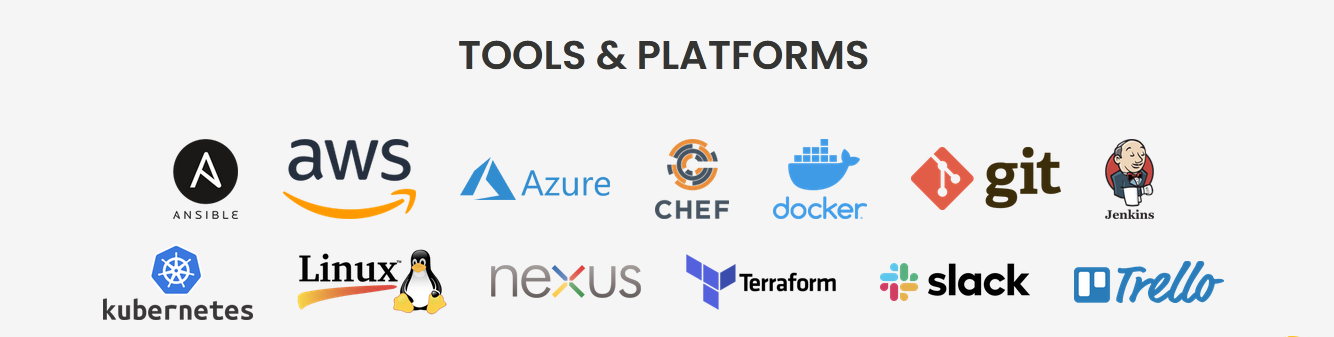
DevOps Training Institute Location
313, Aditya Enclave ,
Near to Ameerpet metro station,
Ameerpet , Hyderabad:500016